
Final Grade Calculator
Total Class Grade Calculator
Final Exam Grade Needed Calculator
Required Final Exam Grade Calculator with Many Grades
Total Class Grade Calculator
Final Exam Grade Needed Calculator
Required Final Exam Grade Calculator with Many Grades
Note: The total weight of all grades, including the final exam, should be 100%.
Trying to figure out what grade you need on your final exam? Whether you’re aiming for a higher grade or trying to keep your scholarship, knowing this number is crucial. A Final Grade Calculator takes the guesswork out of it and gives you a clear target to work toward.
This simple yet powerful tool helps students calculate the score they need on their final exam to achieve their desired overall grade. It’s especially useful for easing stress and helping you plan your study strategy. Just enter your current grade, the weight of your final exam, and the grade you’re aiming for; the calculator will do the rest!
For example, imagine you have a 73% in your math class and want to finish with at least an 89%. If your final exam counts for 25% of your total grade, what score do you need to hit that goal? Instead of guessing, a Final Grade Calculator gives you the exact answer, so you know what to focus on.
In this guide, you’ll not only learn how these calculations work, but you’ll also discover three helpful tools to make your academic planning easier:
- Final Exam Grade Needed Calculator.
- Total Class Grade Calculator.
- Required Final Grade Calculator (for multiple current grades).
These tools will help you study smarter, set realistic goals, and approach your exams with confidence.
Understanding Weighted Grades
Not all grades in a class carry the same weight. Some assignments count more than others, meaning your final grade isn’t just a simple average; it depends on how much each task contributes. For example, a final exam might be worth 70% of your grade, while smaller quizzes only make up 5%.
Here’s what that looks like in real life:
Let’s say your class grades are:
- Homework & Assignments: 50% (counts for 10% of your grade).
- Midterm Test: 60% (counts for 30%).
- Final Exam: ? (counts for 60%).
Your final exam holds a lot of weight; it’s more than half of your total grade! To figure out your final grade, you need to consider how much each score matters. Instead of guessing, a Final Grade Calculator can do the math for you and show exactly what you need to score on the final exam to reach your goal.
This way, you can focus your study time where it matters most and go into your exam with a clear plan!
Breakdown of Grades
Your final grade isn’t just an average of all your scores; it’s made up of different parts, each with its own weight. Here’s a simple breakdown of what usually counts:
- Homework & Assignments: These are graded throughout the semester and might make up 15% of your final grade.
- Quizzes: Short tests that check your understanding, often worth around 10% of your grade.
- Projects: Some classes include big assignments that take more time and effort, usually counting for 25%.
- Class Participation: Things like discussions and attendance may contribute a small percentage, around 5%.
- Final Exam: This is usually the heaviest factor, ranging from 20% to 50% of your total grade.
Example Scenario: Let’s say your scores so far look like this:
- Homework: 75% (worth 15% of your grade).
- Quizzes: 80% (worth 10%).
- Midterm Exam: 70% (worth 25%).
- Final Exam: ??? (worth 50%).
With the final exam carrying so much weight, it has a big impact on your overall grade. If your goal is to finish with 85%, a Final Grade Calculator can help you figure out exactly what score you need on the final to make that happen. No more guessing; just a clear target to aim for!
Final Grade Calculator Worldwide
Grading methods vary from country to country, and understanding these differences can be helpful, especially if you’re studying abroad. Here’s a quick look at how grades are assigned in different regions:
- United States: Grades are typically given as percentages and converted into a GPA (Grade Point Average) on a 4.0 scale.
- 90-100% = A (4.0)
- 80-89% = B (3.0)
- 70-79% = C (2.0) and so on.
- United Kingdom: The grading system is classified into categories:
- First Class (70% and above).
- Upper Second (2:1) (60-69%).
- Lower Second (2:2) (50-59%).
- Third Class (40-49%).
- India: Most schools use a percentage-based system, with some also using a 10-point scale.
- Distinction: 75% and above.
- Pass: 40-50%.
Since grading varies worldwide, it’s always good to understand how different systems work; especially if you’re planning to study in another country!
How the Weighted Average Works
How the Weighted Average Determines Your Final Grade.
The weighted average is how your final grade is calculated, considering both your performance on the final test and your work throughout the course. Here’s the formula:
Your Final Grade = (Final Test Score × Weight of Final Test) + (Current Grade × Weight of Everything Else).
This means your final grade is a combination of how well you did on the final exam and how you’ve performed so far. The more weight the final test has, the more it impacts your final grade.
Example:
Let’s say your current grade is 73%, and you score 84% on a final exam that’s worth 70% of your overall grade.
Your final grade = (84 × 0.70) + (73× 0.30) = 80.7%
How to Calculate Your Final Grade Manually
This shows that performing well on the final exam can significantly boost your grade. In this case, you end up with 80.7% overall.
Calculating your final grade by hand may seem tricky at first, but it’s actually straightforward if you know the right steps. By doing it yourself, you can see how each test or assignment impacts your overall grade. It’s a useful skill to have, as it allows you to double-check online calculators and understand how changes in your grades will affect your final result.
How to Calculate Your Final Class Grade
To calculate your final class grade manually, use this formula:
Final Grade = (Final Test Score × Weight of Final Test) + (Current Grade × Weight of Other Assessments).
Here’s what each term means:
- Final Grade: Your overall final grade in the class.
- Final Test Score: The score you earn on your final exam.
- Weight of Final Test: The percentage value assigned to the final exam (e.g., 0.30 for 30%).
- Current Grade: Your grade before the final exam.
- Weight of Other Assessments: The combined weight of all other work, calculated as 1 minus the weight of the final exam.
This formula shows the impact of your final test score in relation to your performance throughout the course.
A Step-by-Step Example
Let’s go through an example step by step:
- You currently have a 70% in the class. Your final test is worth 60% of your grade, and you score 85% on the final test.
- Convert the 60% weight to decimal form: 60% becomes 0.60.
- Now, use the formula:
Final Grade = (Final Test Score × Weight of Final Test) + (Current Grade × Weight of Other Assessments)
Final Grade = (85 × 0.60) + (70 × (1 – 0.60)) - Calculate each part:
- 85 × 0.60 = 51
- 70 × 0.40 = 28
- Add the results:
Final Grade = 51 + 28 = 79%
So, if you have a 70% before the final test and score 85% on the final test, your final grade will be 79%.
This method is correct and accurately demonstrates how to compute your final grade based on current and final test scores.
Figuring Out What You Need on the Final Test
If you’re trying to figure out what score you need on your final test to hit a certain grade, here’s an easy formula to follow:
Score You Need = (Desired Grade – (Current Grade × Weight of Other Assessments)) ÷ Weight of Final Test
Here’s what each part means:
- Score You Need: The score you need on your final test.
- Desired Grade: The grade you’re aiming for in the class.
- Current Grade: The grade you have right now.
- Weight of Final Test: How much the final test counts towards your grade (like 0.60 for 60%).
- Weight of Other Assessments: Everything else that counts towards your grade, which is 1 minus how much the final test counts.
This formula shows you exactly what you need to score on the final to reach your goal.
A Different Example
Let’s go through an example:
- You currently have a 70% in the class and want to finish with an 88%. Your final test is worth 40% of your grade.
- Convert 40% to decimal form: 0.40.
- Now, use the formula:
Score You Need = (88 – (70 × (1 – 0.40))) ÷ 0.40 - Solve step by step:
- 70 × 0.60 = 42
- 88 – 42 = 46
- 46 ÷ 0.40 = 115
- This means you would need 115% on the final test to reach an 88% overall.
Since it’s impossible to score over 100%, this tells you that achieving an 88% final grade isn’t possible with these numbers.
Three Useful Final Grade Calculators to Determine Your Final Grades
Now that you know how to calculate your final grade manually, here are three great tools to make it even easier. These calculators save you time and provide quick answers, allowing you to focus more on studying and less on complex calculations.
Tool 1: Final Grade Calculator
This tool helps you determine the score you need on your final exam to reach a specific overall grade. It’s perfect if you have a target in mind and want to know exactly what it takes to achieve it.
How to Use It:
- Enter your current grade, desired final grade, and the weight of the final exam.
- The tool automatically calculates the required score using a simple formula.
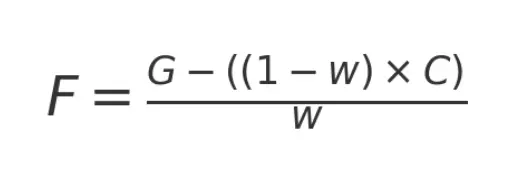
F = [G − ( (1 – w) × C )] / w
Where:
- F = Score needed on the final exam
- G = Desired final grade
- C = Current grade
- w = Weight of the final exam (in decimal form)
- Instantly, you’ll see the exact score you need on your final test.
Example: If you currently have 70% and want to finish with 85%, and your final exam is worth 50% of your grade, the tool will show that you need 100% on the final test to reach your goal.
Tool 2: Class Final Grade Calculator
This calculator helps you determine your overall class grade after taking your final exam. It’s great when you already know your final exam score but aren’t sure how it affects your total grade.
How to Use It:
- Enter your current average grade, final exam score, and the weight of the final exam.
- The tool automatically calculates your final grade for you.

- Instantly, you’ll see your overall class grade.
Example: If your current grade is 60% and you score 90% on a final exam worth 70% of your grade, the tool will calculate your final class grade as 81%.
Tool 3: Final Grade Calculator with Multiple Grades
Take your grade calculations to the next level with our advanced tool. This calculator considers multiple current grades with different weights, helping you determine exactly what you need on the final exam to reach your target grade.
How to Use:
- Enter your current grades: Input each grade and its corresponding weight.
- Set your target grade: Specify the grade you want to achieve and the weight of the final exam.
- Get your final exam target: The tool calculates the exact score you need on the final exam.
The calculator uses the weighted average formula:
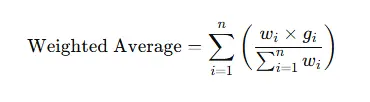
Where:
- wi = The weight assigned to each grade
- gi = The corresponding grade
How This Helps:
Suppose you have grades such as 85% (weighted at 20%), 78% (weighted at 30%), and 80% (weighted at 10%). If your final exam carries 40% of the total weight and you aim for an 85% overall, this formula helps determine the score you need on the final exam to achieve your goal.
Why Use These Tools Instead of Calculating Manually?
- They save time: Understanding the math is great, but these tools get you the answer much faster.
- They’re simple to use: Just enter a few numbers, and you’re done; no complicated calculations required.
- They’re error-free: Manual math can lead to mistakes, especially with multiple calculations. These tools ensure accuracy every time.
Making the Most of a Final Grade Calculator
A Final Grade Calculator is a great way to track your academic progress. Follow these tips to use it effectively:
- Enter weights correctly; For example, 40% should be entered as 0.40, not 40.
- Know your current grade before using the calculator for accurate predictions.
- Understand the weight of your final exam to see how much it impacts your overall grade.
- Use the save feature to monitor your progress over time.
- Test different scenarios to set realistic goals for your final score.
- Double-check calculations manually to confirm accuracy.
Tips for Improving Your Grades
- Prioritize major assignments and exams that carry the most weight.
- Break big study goals into smaller steps to make them more manageable.
- Seek feedback from teachers early and work on areas that need improvement.
- Study with a group to tackle difficult subjects together.
- Review consistently and take practice tests to reinforce learning.
- Maintain a balanced study schedule to stay productive without burning out.
Conclusion
Keeping track of your grades is key to doing well in school. A Final Grade Calculator is a helpful tool that lets you plan ahead, set achievable goals, and avoid surprises when grades come out. By entering details like your current grade, target grade, and final exam weight, you can quickly figure out what score you need to reach your goal.
Using this information to plan your study time wisely ensures you focus on what matters most. Remember, success comes from consistent effort, smart planning, and making the most of the tools available to you!